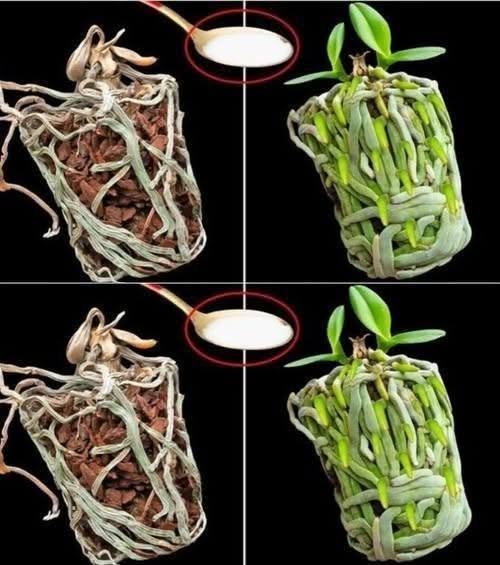
What Those Viral “1 Spoonful” Root Hacks Actually Do
-
Aloe Vera Gel or Honey Water:
-
The claim: “Natural plant hormones and enzymes make roots sprout rapidly.”
-
The reality: Neither contains effective root-initiating auxins at meaningful concentrations, and sticky sugars left in bark media quickly breed mold, bacteria, and fungus gnats.
-
-
Garlic Water or Onion Peel Water:
-
The claim: “Kills root rot and stimulates explosive root growth.”
-
The reality: Sulfur compounds in raw garlic have weak antimicrobial action in lab dishes, but soaking weakened orchids in garlic water leaves an odor, attracts pests, and does not trigger new root tips.
-
-
Cinnamon Powder:
-
The claim: “A spoonful in the pot heals dried roots and grows new ones.”
-
The reality: Cinnamon is useful only as a thin dusting on a fresh cut to dry out a wound and prevent fungal entry; dumping a spoonful onto remaining live roots desiccates them further.
-
-
Commercial Rooting Hormone (IBA / NAA):
-
The note: Real rooting hormones work well on woody stem cuttings (like roses or pothos), but epiphytic orchids (Phalaenopsis) respond poorly to standard rooting powders, which can burn delicate velamen root tissue unless specifically formulated as a dilute kelp/auxin orchid tonic.
-
How to Actually Rescue a Dehydrated Orchid and Grow New Roots
-
Trim Away Truly Dead Roots First: Remove the orchid from its pot and shake off old broken-down bark. Feel each root: keep anything firm (even if pale white or yellow from lack of light), and snip off only hollow, papery, or mushy brown/black roots using scissors wiped with rubbing alcohol.
-
Rehydrate the Plant Safely: If the remaining live roots are shriveled and silvery-gray, soak just the root zone (keeping water out of the center leaf crown) in room-temperature plain water for 15–20 minutes, then drain completely.
-
Pot Into Fresh, Airy Orchid Media: Orchid roots need oxygen around them at all times. Repot into a clear pot with drainage holes using fresh medium-grade fir bark (or a bark-and-sphagnum-moss mix if your indoor air is very dry)—never regular garden soil.
-
Create Gentle Humidity Around the Base (Not Soggy Wetness): Place the pot in bright, indirect light (no harsh direct midday sun on stressed leaves) in a warm spot (21–26°C / 70–79°F). If the orchid lost almost all its roots (“rootless orchid”), loosely tent a clear plastic bag over the pot or set it on a pebble tray with water below the pot bottom so high humidity keeps the leaves hydrated while new root nubs emerge.
-
Feed Lightly Only After New Green Root Tips Appear: Wait until you see plump, bright-green growing tips emerging from the stem base before resuming a 1/4-strength balanced orchid fertilizer—fertilizing a rootless, dehydrated plant only burns emerging tissues.