Emergency Red Flags: Go to Urgent/Emergency Care Immediately
-
Chest pressure, squeezing, tightness, or fullness—especially if it spreads to the left arm, shoulder, neck, jaw, or upper back, or comes with shortness of breath, cold sweats, nausea, or lightheadedness (classic signs of a heart attack / acute coronary syndrome).
-
Sudden, severe “tearing” or “ripping” pain in the chest or upper back (a warning sign of aortic dissection).
-
Sudden severe left upper abdominal or left shoulder-tip pain after a fall, blow, or sports injury (possible splenic injury or rupture).
-
Severe abdominal pain with high fever, persistent vomiting, rigid/board-like belly, fainting, or blood in vomit/stool.
-
Sudden one-sided weakness, facial drooping, slurred speech, or vision loss.
What Left-Sided Pain Usually Means by Location
1. Left Chest & Rib Cage
-
Cardiovascular (Always rule out first when uncertain): Heart attack, angina (exertional chest tightness relieved by rest), or pericarditis (sharp chest pain that worsens when lying flat and eases when leaning forward).
-
Musculoskeletal (Very common): Costochondritis (inflammation where ribs meet the breastbone) or an intercostal muscle strain after lifting, coughing, or twisting—usually sharp, localized, and reproducible when you press on the tender spot or twist your torso.
-
Digestive / Pulmonary: Acid reflux (GERD) or esophageal spasm causing burning behind the breastbone; pleurisy or pneumonia causing sharp pain when taking a deep breath.
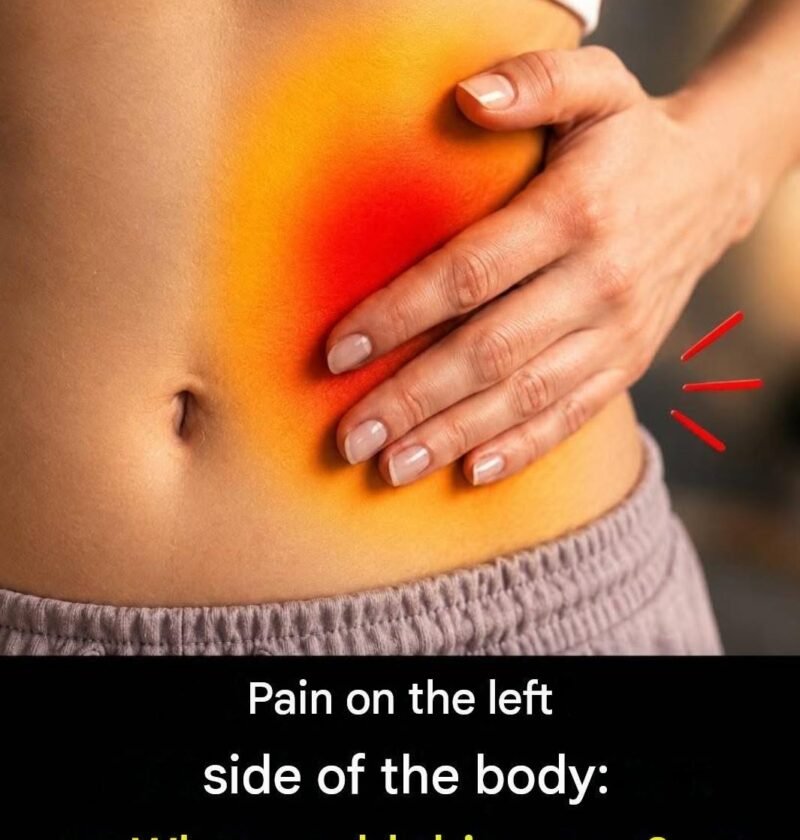
2. Left Upper Abdomen (Under the Left Ribs)
-
Stomach & Esophagus: Gastritis, peptic ulcer, or trapped gas in the upper colon (splenic flexure syndrome), often linked to meals, hunger, or bloating.
-
Spleen: An enlarged or irritated spleen (from infections like mononucleosis or blood conditions) causes a dull ache or fullness under the left ribs and feeling full after eating only a few bites.
-
Pancreas: Acute pancreatitis causes severe upper-left/mid-abdominal pain that radiates straight through to the back, often accompanied by nausea and vomiting.
3. Left Flank & Mid-to-Lower Back
-
Kidney Stones or Kidney Infection (Pyelonephritis): Sharp, wave-like pain starting in the left flank/back and radiating toward the lower groin—often paired with painful urination, frequent urination, pink/red urine, fever, or chills.
-
Lumbar Muscle Strain or Pinched Nerve: Dull aching or sharp spasm worsened by bending, twisting, or sitting, or shooting down the left leg (sciatica).
4. Left Lower Abdomen & Pelvis
-
Digestive Tract (Most frequent): Constipation, irritable bowel syndrome (IBS) cramping, or diverticulitis (inflammation of small pouches in the lower-left colon, which typically causes steady left-lower abdominal pain, tenderness, fever, and bowel habit changes).
-
Gynecological / Urological: Ovarian cysts, ovulation pain (mittelschmerz), pelvic inflammatory disease, or ectopic pregnancy (a medical emergency if a missed period, positive pregnancy test, or vaginal bleeding is present), as well as testicular torsion or inguinal hernia.
Practical Steps While Deciding What to Do
-
Check for Red Flags First: If chest pressure, shortness of breath, sweating, fainting, high fever, or post-injury belly pain is present, seek emergency care rather than driving yourself.
-
Track Specific Clues for Your Doctor: Note exact location, onset (sudden vs. gradual), character (burning, cramping, sharp, squeezing), and triggers (eating, deep breathing, movement, exertion, or urination).
-
Avoid Masking Severe Pain Before Evaluation: Do not take repeated painkillers to push through severe, unexplained abdominal or chest pain—and avoid NSAIDs (like ibuprofen) if stomach ulcer or kidney pain is suspected.