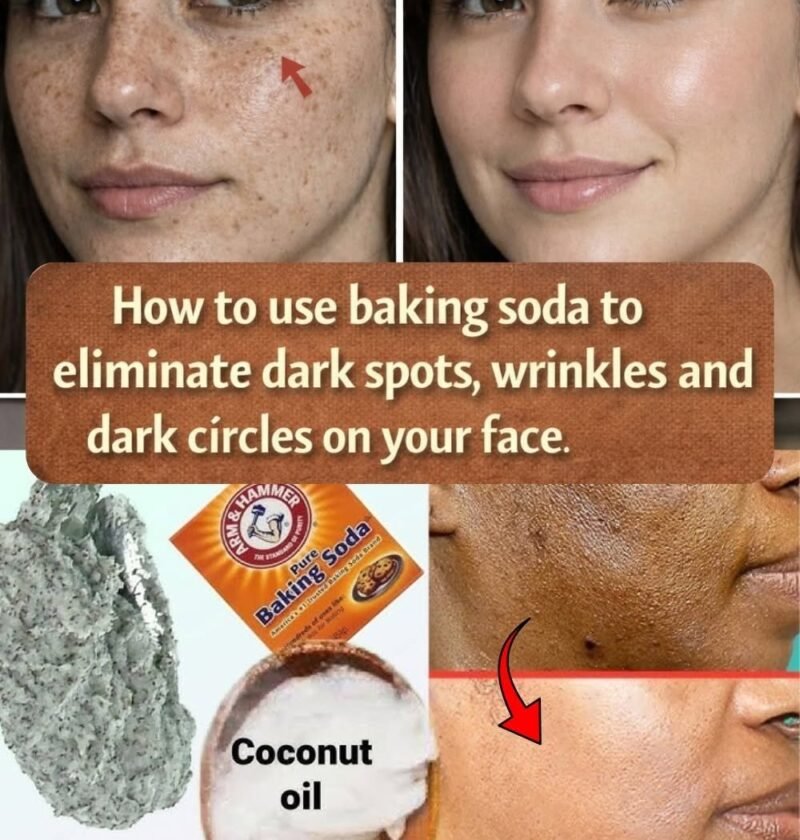
What Baking Soda Actually Does on Skin
-
Temporary physical exfoliation: Its fine, gritty crystals scrub away loose dead skin cells and surface sebum, giving an immediate—but short-lived—smooth feeling.
-
Oil absorption and mild deodorizing: It blots excess shine and temporarily neutralizes surface odors or sweat.
-
No true acne or dark-spot cure: Baking soda does not unclog deep pores, kill acne-causing bacteria safely, or fade hyperpigmentation; any initial “clearing” is quickly followed by rebound oiliness or irritation.
Why Dermatologists Warn Against Baking Soda Masks
-
Disrupts Your Skin’s Acid Mantle (pH Mismatch):
-
Healthy facial skin has a slightly acidic protective film called the acid mantle (pH 4.5 to 5.5), which locks in moisture and keeps harmful bacteria out.
-
Baking soda has an alkaline pH of roughly 8.3 to 9. Applying it strips away natural lipids and raises skin pH, triggering dryness, redness, tightness, and more breakouts over time.
-
-
Causes Micro-Tears and Barrier Damage:
-
Even mixed into a paste, undissolved baking soda crystals have jagged edges that can scratch delicate facial skin—especially around the cheeks, nose, and under-eye area.
-
-
Worsens Sensitive, Aging, or Eczema-Prone Skin:
-
Thinning or mature skin already produces less natural oil and repairs its barrier more slowly. An alkaline mask can trigger burning, flaking, contact dermatitis, or post-inflammatory dark marks.
-
-
Even Worse When Mixed With Lemon Juice or Vinegar:
-
Viral recipes often combine baking soda with lemon juice (extremely acidic, pH ~2, and phototoxic in sunlight). Either the mixture neutralizes into salty water or leaves pockets of harsh acid and base that irritate skin further.
-
Safer, Proven Alternatives for the Same Goals
-
For clogged pores and blackheads: Use a gentle salicylic acid (BHA 1%–2%) cleanser or leave-on toner, which dissolves oil inside pores without stripping the skin’s pH.
-
For dullness and gentle exfoliation: Choose a mild lactic acid or polyhydroxy acid (PHA) product, or simply wipe damp skin gently with a soft cotton washcloth.
-
For excess shine and oily T-zones: Use a plain kaolin or bentonite clay mask once a week—clay absorbs oil without dangerously spiking skin pH.