Headlines like “Nighttime Leg Cramps After 40? 7 Hidden Causes That Could Be Waking You Up – And How to Find Relief Naturally!” use a real, painful, and very common midlife issue (nocturnal leg cramps) as a hook—while labeling everyday medical and lifestyle triggers as “hidden causes” and hinting at natural fixes.
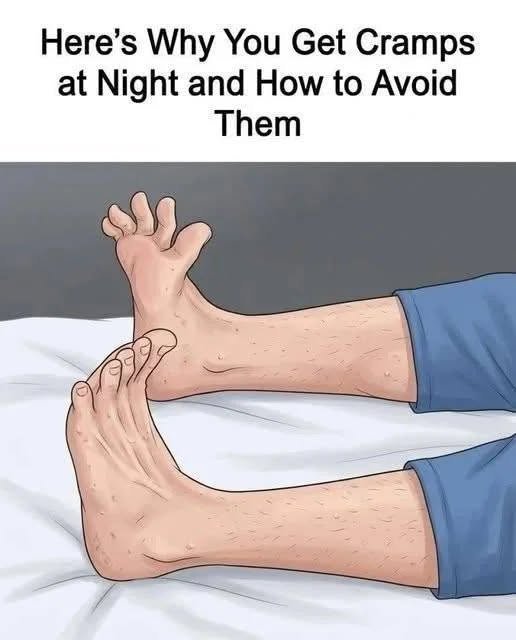
Nighttime leg cramps are genuinely common after age 40, affecting up to a third of middle-aged and older adults. Most are harmless—caused by sudden, involuntary spasms of the calf, foot, or thigh muscles during rest—yet specific triggers make them far more frequent.
What Those “7 Hidden Causes” Actually Are
-
Age-Related Tendon Shortening & Muscle Fatigue:
-
After 40, tendons naturally lose elasticity and muscle mass gradually declines. Sitting for long stretches (shortening the calf muscles) or suddenly overexerting legs during the day leaves motor nerves hyper-excitable at night.
-
-
Fluid & Electrolyte Imbalances:
-
Sweating heavily in warm weather without replacing fluids, or low levels of potassium, magnesium, or calcium, can make muscle fibers misfire—though most people with cramps actually have normal blood electrolyte levels.
-
-
Common Prescription Medications:
-
Diuretics (“water pills”) for blood pressure, statins (occasionally cause muscle aches/cramps), inhaled asthma/COPD medications (long-acting beta-agonists), and intravenous iron or osteoporosis drugs are well-known triggers.
-
-
Reduced Leg Circulation (Peripheral Artery Disease) or Venous Pooling:
-
Narrowed leg arteries reduce oxygen delivery to muscles, while weak leg veins cause fluid buildup and aching heaviness by evening.
-
-
Pinched Lower-Back Nerves (Lumbar Spinal Stenosis) or Peripheral Neuropathy:
-
Mild age-related narrowing in the lower spine or nerve irritation from diabetes or Vitamin B12 deficiency can mimic or trigger nighttime calf spasms.
-
-
Underactive Thyroid (Hypothyroidism) or Kidney/Liver Conditions:
-
Slowed thyroid metabolism and chronic kidney or liver disease alter how nerves and muscles regulate calcium and fluid balance.
-
-
Sleeping Posture (Pointed Toes):
-
Sleeping face-down or under heavy, tightly tucked blankets forces the foot into plantarflexion (toes pointed downward), shortening the calf muscle so even a tiny twitch locks it into a painful cramp.
-
What Actually Relieves and Prevents Them (Evidence vs. Myths)
-
To stop a cramp right when it hits:
-
Stretch the calf immediately: Stand up and press your heel flat into the floor, or sit up in bed and pull your toes firmly toward your shin (dorsiflexion) until the spasm releases.
-
Massage and apply warmth: Gently knead the knotted muscle or use a warm towel/heating pad once the acute spasm eases.
-
-
To prevent them at night:
-
Do a 60-second calf stretch before bed: Stand facing a wall, step one foot back with the heel flat and knee straight for 30 seconds per leg.
-
Loosen bedsheets at the foot of the bed so your toes aren’t pushed downward while sleeping, and keep a glass of water nearby during warm months.
-
-
Supplement reality check:
-
Despite heavy marketing, clinical trials show magnesium supplements rarely outperform a placebo for typical nighttime leg cramps in healthy adults (unless you have a true deficiency, pregnancy-related cramps, or malabsorption). Avoid quinine (or tonic water used for quinine)—it is no longer recommended for leg cramps due to serious heart-rhythm and blood-cell risks.
-
When to See a Doctor Promptly
Book a medical checkup if cramps occur several nights a week, disrupt your sleep, or appear alongside leg swelling, skin redness/warmth, muscle weakness, numbness/tingling, or pain when walking that stops with rest (which points toward circulation or nerve testing rather than simple muscle fatigue).
Are you auditing another health listicle, or dealing with nighttime leg cramps yourself