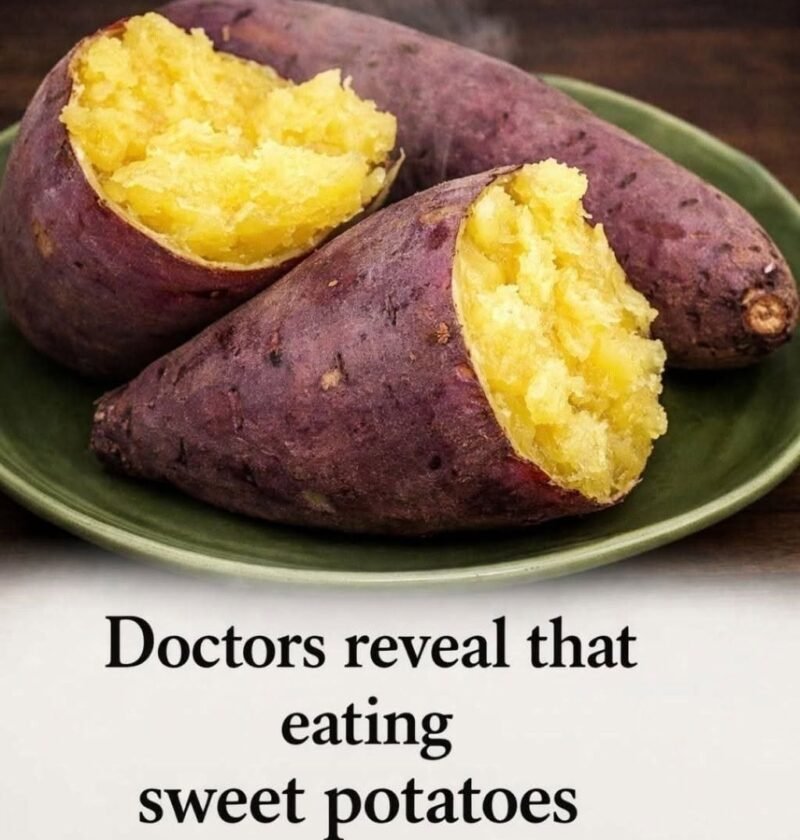
What Eating Sweet Potatoes Actually Does
-
Supports vision and immune function: Orange-fleshed sweet potatoes are one of the richest natural sources of beta-carotene, which the body converts into vitamin A.
-
Improves gut health: Their soluble and insoluble fiber feed beneficial gut bacteria and promote regular digestion.
-
Helps manage blood pressure: A single medium sweet potato provides roughly 400–500 mg of potassium, which helps counteract sodium and support healthy blood pressure.
-
Provides steady energy: Unlike refined starches, their fiber slows digestion, leading to a more gradual rise in blood sugar—especially when boiled or steamed rather than baked or fried.
Potential Downsides to Keep in Mind
-
Harmless skin tinting (carotenemia): Eating very large amounts daily can give palms and soles a temporary yellow-orange tint, which fades once intake drops.
-
Kidney stone risk for susceptible people: Sweet potatoes contain oxalates, which can contribute to calcium-oxalate kidney stones in people prone to forming them.
-
Digestive gas or bloating: Sudden increases in fiber or fermentable carbs () can cause mild bloating.