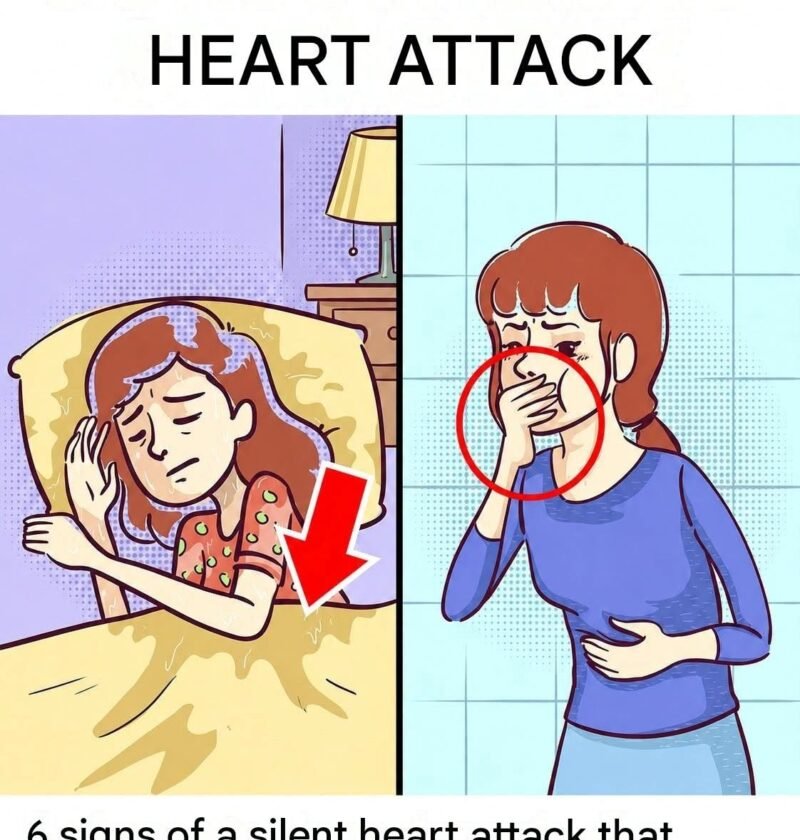
6 Overlooked Signs of a Silent Heart Attack
-
Unexplained, Crushing Fatigue Sudden exhaustion that makes everyday tasks—like walking up a short flight of stairs, carrying groceries, or making the bed—feel disproportionately heavy. When the heart muscle is starved of oxygen, cardiac output drops, leaving tissues fatigued even without exertion.
-
Persistent “Indigestion,” Heartburn, or Nausea Discomfort in the upper center of the abdomen that feels like acid reflux, fullness, bloating, or mild nausea. Because the heart and stomach share nerve pathways via the , reduced blood flow to the bottom wall of the heart frequently masquerades as a stomach issue—especially if antacids fail to relieve it.
-
Mild Pressure or Tightness Instead of Sharp Pain Rather than sharp pain, many people experience a dull ache, squeezing, fullness, or uncomfortable pressure in the center of the chest that comes and goes over several hours or days.
-
Aching in the Jaw, Neck, Upper Back, or One or Both Arms Cardiac nerve signals can radiate upward or outward, causing a dull toothache-like jaw pain, tightness across the shoulders, or a heavy ache between the shoulder blades. Women, older adults, and people with diabetes are especially likely to experience back, neck, or jaw discomfort without any chest symptoms.
-
Shortness of Breath Without Chest Discomfort Feeling winded during light activity—or waking up gasping for air while lying flat—happens when fluid backs up into the lungs because the left ventricle cannot pump efficiently.
-
Cold Sweats, Lightheadedness, or Sudden Anxiety Breaking out into a cold, clammy sweat for no obvious reason, feeling suddenly dizzy or faint, or experiencing an abrupt sense of unease. This triggers when the nervous system releases stress hormones in response to dropping blood pressure and heart muscle distress.
Who Faces the Highest Risk of Silent Symptoms?
-
People with diabetes: High blood sugar over time can damage sensory nerves (), blunting the chest pain that normally warns of a blockage.
-
Women and older adults: Both groups statistically report atypical symptoms—fatigue, back pain, shortness of breath, and nausea—more frequently than classic left-sided chest pain.
-
Individuals with high blood pressure, high cholesterol, or a smoking history: Silent ischemia often develops gradually as plaque narrows coronary arteries.