1. Enamel Thinning (The #1 Reason Teeth Yellow With Age)
-
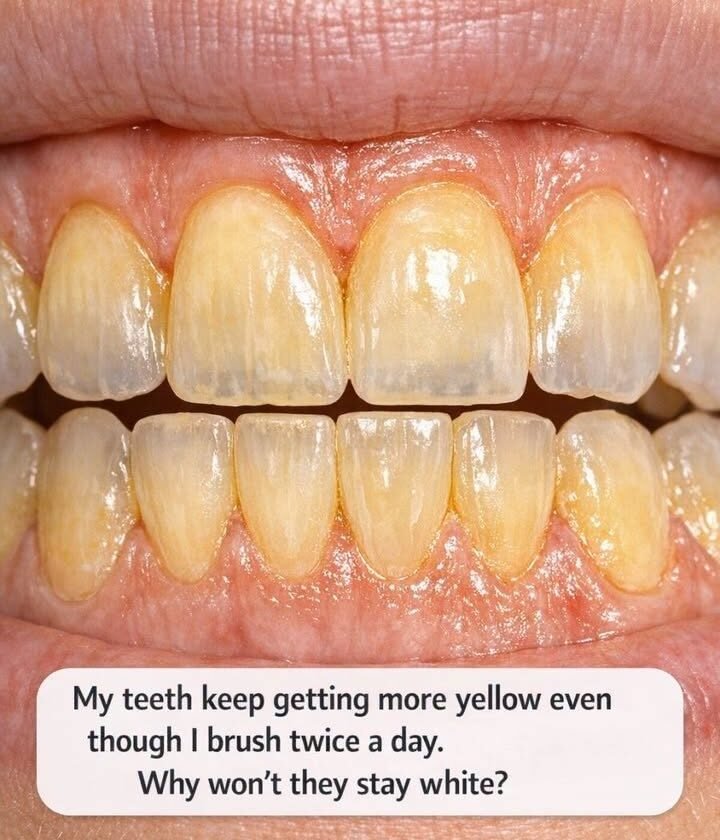
Over the years, normal chewing, acidic foods, and daily wear gradually thin the outer enamel.
-
As enamel becomes thinner and more translucent, more of the yellow dentin underneath shows through—no matter how thoroughly you brush.
2. Brushing Too Hard or Using Abrasive “Whitening” Toothpaste
-
Scrubbing forcefully with a hard-bristled brush—or using gritty charcoal/whitening pastes daily—wears away protective enamel faster.
-
Removing that outer enamel exposes deeper yellow dentin permanently and increases tooth sensitivity.
3. Deep Staining Drinks and Foods (Chromogens & Tannins)
-
Tea (especially black and green tea), coffee, dark sodas, red wine, and dark berries.
-
Spices and sauces: Turmeric, curry sauces, tomato paste, and soy sauce.
-
Tobacco: Smoking or chewing tobacco leaves stubborn yellow-brown stains that standard brushing cannot lift.
4. Tartar (Calculus) Buildup
-
Even with regular brushing, leftover plaque along the gumline and behind lower front teeth hardens into tartar within days.
-
Tartar is porous, absorbs food stains rapidly, and looks noticeably yellow or brownish—and once hardened, only a dental hygienist’s instruments can remove it.
5. Medications, Dry Mouth, and Past Dental Work
-
Dry mouth: Saliva washes away stain-causing acids and pigments; medications (such as blood pressure pills or antihistamines) or mouth breathing accelerate yellowing.
-
Certain medications or excess fluoride in childhood can cause deeper internal discoloration.
-
Older white fillings or bonding absorb stains differently than natural enamel and darken unevenly over time.
What Actually Helps Keep Teeth Brighter Safely
-
Switch to a soft-bristled brush and gentle pressure: Let the bristles sweep along the gumline without scrubbing hard.
-
Wait 30 minutes after acidic foods or tea/coffee before brushing: Acids temporarily soften enamel; brushing immediately rubs softened enamel away. Rinse with plain water right after drinking tea or coffee instead.
-
Schedule a professional dental cleaning (scaling and polishing): Removes hardened yellow tartar and stubborn surface stains that toothbrushes cannot touch.
-
Use proven peroxide-based whitening if you want to lighten internal shade: Over-the-counter hydrogen peroxide strips or dentist-supervised whitening trays safely lighten pigments inside enamel, whereas abrasive “whitening” toothpastes only scrub the surface.