Common Nail Changes After 40 That Are Usually Harmless
-
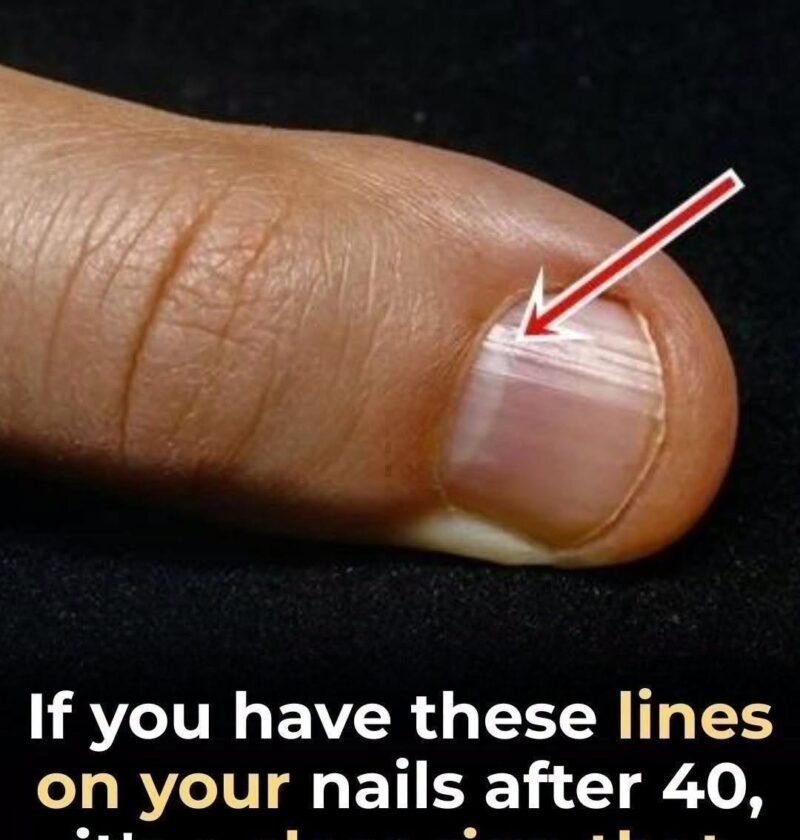
Vertical ridges (longitudinal striations): Fine lines running from the cuticle to the tip become very common after 40 as nail cell turnover slows and moisture retention drops.
-
Slower growth and slight thickening: Fingernails and especially toenails grow more slowly with age, making them look slightly thicker or duller.
-
Mild peeling or splitting at the tips: Usually driven by repeated handwashing, dish soap, dry air, or nail polish removers rather than internal disease.
Nail Changes That Actually Warrant a Doctor’s Look
-
Horizontal grooves across the nails (Beau’s lines): Deep crosswise indentations show that nail growth temporarily paused—often weeks after a high fever, severe illness, major stress, or certain medications.
-
Spoon-shaped, thin, concave nails (koilonychia): Nails that curve upward at the edges can point to iron-deficiency anemia or poor iron absorption.
-
Nails lifting from the nail bed (onycholysis): When the white tip extends down into the pink nail bed, common causes include fungal infection, psoriasis, minor trauma, or an overactive thyroid.
-
Tiny pinpoint dents (“pitting”): Small ice-pick-like depressions on the nail surface are frequently linked to psoriasis or inflammatory skin/joint conditions.
-
Clubbing (widened fingertips with downward-curving nails): Nails that dome over swollen, rounded fingertips develop gradually and warrant medical evaluation for heart, lung, or digestive conditions.
-
Yellow, thickened, crumbly nails: Most often a fungal nail infection (especially on toenails), though persistent yellow discoloration across all nails can rarely reflect lymphatic or lung issues.
-
A new dark brown or black vertical stripe under one nail: While dark bands can be benign pigment streaks (especially in darker skin tones), a new, widening, or irregular dark stripe on a single nail—or pigment spreading onto the surrounding skin—must be checked promptly by a dermatologist to rule out subungual melanoma.
Practical Nail Care After 40
-
Moisturize nails and cuticles daily with thick hand cream, petroleum jelly, or plain oil after washing hands.
-
Wear gloves for dishwashing, cleaning, and gardening to prevent repeated water-and-detergent damage.
-
Trim nails straight across (especially toenails) and smooth sharp edges gently with a file to prevent ingrown nails and splitting.
-
Skip high-dose biotin megadoses unless advised by a doctor—evidence for general nail aging is weak, and excess biotin can interfere with important blood tests (including thyroid and cardiac troponin tests).