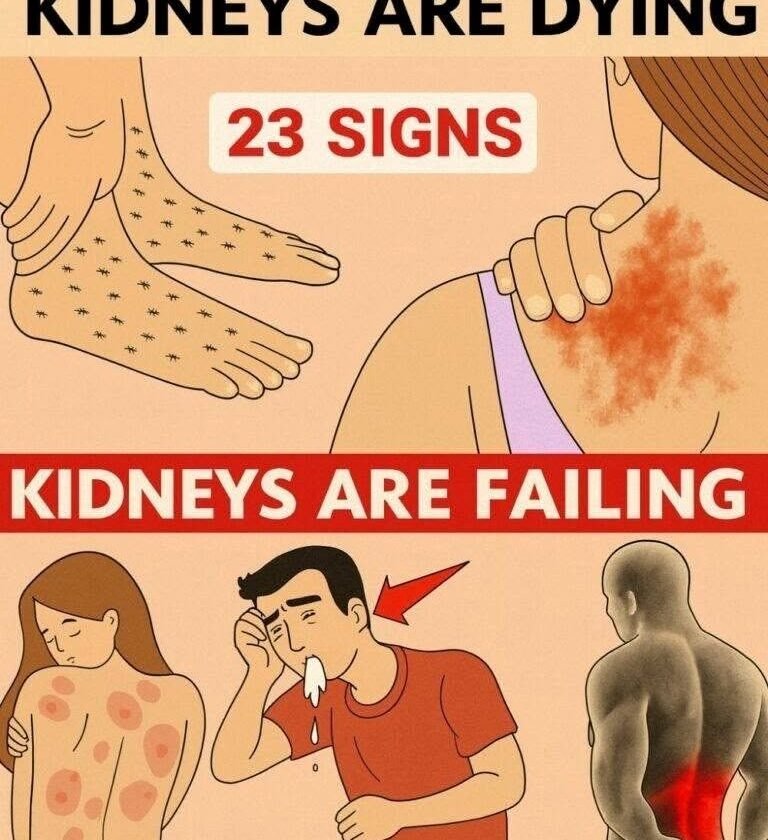
Real Clinical Signs of Kidney Decline vs. Padded “Strange” Clues
1. Genuinely Relevant Kidney Signs (Usually Moderate-to-Advanced Decline)
-
Persistent foamy or bubbly urine: Caused by excess protein (albumin) leaking through damaged kidney filters—unlike occasional bubbles from a fast urine stream, protein foam stays in the bowl after flushing.
-
Swelling in the feet, ankles, hands, or puffiness around the eyes (especially in the morning): Happens when kidneys fail to clear excess sodium and fluid or lose blood protein.
-
Changes in urination: Waking up multiple times at night to urinate (nocturia), passing noticeably less urine, or seeing pink, red, or dark tea-colored urine (blood).
-
Persistent metallic taste in the mouth or ammonia-smelling breath: Caused by waste buildup (uremia) in the bloodstream, often paired with loss of appetite or morning nausea.
-
Severe, widespread dry and itchy skin (uremic pruritus): Occurs in advanced kidney disease when mineral and waste balances (especially phosphorus) go off track.
2. Nonspecific Symptoms Listicles Pad Out to Reach “23”
-
Fatigue, weakness, and poor concentration (often from kidney-related anemia)
-
Feeling cold all the time (anemia)
-
Shortness of breath after minimal effort (fluid in the lungs or anemia)
-
Muscle cramps and restless legs (calcium, potassium, or sodium imbalances)
-
Trouble sleeping (linked to fluid shifts, restless legs, or sleep apnea)
How Kidney Trouble Is Actually Caught Early
-
Blood test for Serum Creatinine & eGFR: Estimates how efficiently your kidneys filter waste.
-
Urine Albumin-to-Creatinine Ratio (uACR): Detects microscopic protein leakage years before physical symptoms appear.