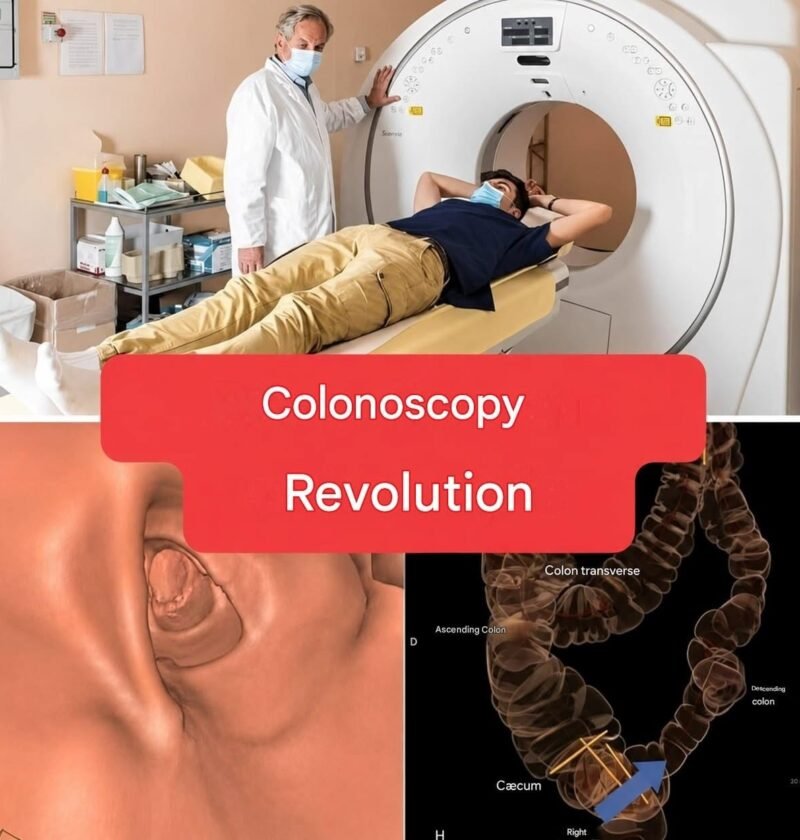
Non-invasive alternatives to traditional colonoscopy are rapidly replacing routine screening for average-risk adults—most notably FDA-approved blood tests (liquid biopsies), next-generation stool DNA tests, and AI-guided colon capsule endoscopy. While these options eliminate anesthesia, bowel prep (for blood and stool tests), and scope insertion for initial screening, a traditional colonoscopy remains the essential follow-up if any non-invasive test returns a positive result.
The Main Non-Invasive Colonoscopy Alternatives
| Screening Method | How It Works | What It Detects Best | Key Limitations |
| Blood-Based Liquid Biopsy (e.g., Shield) | A simple blood draw detects circulating tumor DNA (ctDNA) shed by cancerous cells into the bloodstream. | ~83% sensitivity for colorectal cancer; requires no bowel prep or stool handling. | Low sensitivity (~13%) for precancerous polyps, meaning it catches cancer early rather than preventing it before it forms. |
| Next-Gen Multi-Target Stool DNA (e.g., Cologuard Plus) | At-home stool sample analyzed for specific DNA mutations and hidden blood markers. | ~94% sensitivity for cancer and ~43% sensitivity for advanced precancerous polyps. | Must be repeated every 3 years; carries a ~10% false-positive rate that requires a follow-up colonoscopy. |
| Colon Capsule Endoscopy (PillCam COLON) | You swallow a vitamin-sized capsule containing two miniature wireless cameras that take thousands of photos as it passes through the colon. | Visualizes polyps and mucosal tissue directly without sedation or a physical scope. | Still requires full liquid bowel prep so cameras have a clear view, and cannot remove polyps during the test. |
| CT Colonography (Virtual Colonoscopy) | Low-dose CT scan creates 3D cross-sectional images of the colon lining after gently inflating the colon with air or carbon dioxide. | Detects medium-to-large polyps (6 mm or larger) with ~90% accuracy in 10–15 minutes without sedation. | Requires full bowel prep, uses mild radiation, and still requires a traditional colonoscopy to remove any polyps found. |
Why Traditional Colonoscopy Still Has One Unmatched Advantage
Every non-invasive test—whether blood, stool, pill camera, or CT scan—is strictly diagnostic (detect-only):
-
One-step prevention: During a traditional colonoscopy, the doctor immediately snips out precancerous polyps during the same procedure, stopping colorectal cancer before it ever develops.
-
Mandatory follow-up rule: If a blood test, stool test, or pill camera flags an abnormality, you must still undergo a standard colonoscopy so a doctor can biopsy or remove the tissue.
(Feel free to share part 2/2 whenever you are ready—I can break down whichever specific method or detail your article highlights.)