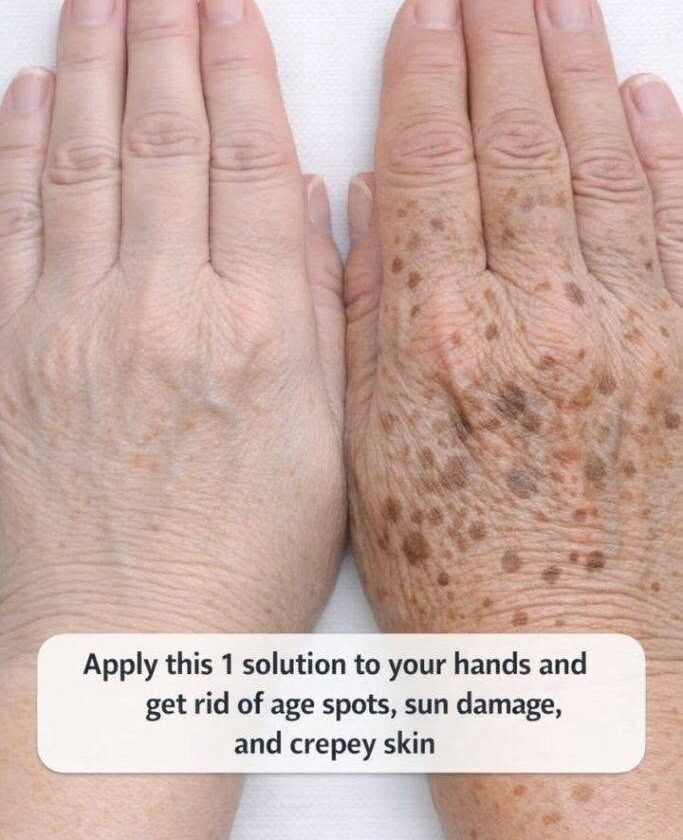
That headline style is a classic internet clickbait hook—and unfortunately, no 3-minute, zero-effort home trick can diminish dark age spots (solar lentigines).
Why 3-Minute Tricks Don’t Work
Age spots are clusters of excess melanin produced deep in the epidermis after years of cumulative UV sun exposure. Because that pigment sits beneath the surface skin cells, anything applied for 3 minutes—like lemon juice, apple cider vinegar, baking soda, or toothpaste—cannot penetrate deeply enough or speed up cellular turnover fast enough to fade it. Worse, acidic or abrasive DIY rubs often irritate the thin skin on the backs of your hands, triggering post-inflammatory hyperpigmentation that actually makes dark spots look darker.
What Actually Fades Age Spots on Hands
Real fading takes consistent daily care over 6 to 12 weeks (the time it takes skin cells to renew), or targeted in-office procedures:
| Approach | What to Look For | Realistic Timeline |
| Daily Sunscreen (Non-Negotiable) | Broad-spectrum SPF 30 or higher applied every morning and reapplied after handwashing. Without UV protection, sun exposure darkens spots faster than any treatment can fade them. | Prevents new spots immediately; lets treatments work |
| Over-the-Counter Brighteners | Creams or serums containing retinol, vitamin C, niacinamide, azelaic acid, or alpha arbutin applied consistently each night/morning. | 8 to 12 weeks for noticeable gradual fading |
| Prescription Topicals | Dermatologist-prescribed tretinoin or short-term hydroquinone creams for stubborn spots. | 4 to 8 weeks |
| Dermatology Procedures | Cryotherapy (targeted freezing), IPL (Intense Pulsed Light), or Q-switched laser treatments. | 1 to 3 quick sessions (the closest thing to fast results) |
Important safety check: Before treating any dark spot on your hands, have a dermatologist check it—especially if a spot has irregular borders, multiple colors, bleeds, itches, or changes size rapidly—to rule out skin cancers like melanoma.