Method 1: Baking Soda + Aluminum Foil Bath (Best for Heavy Black Tarnish)
-
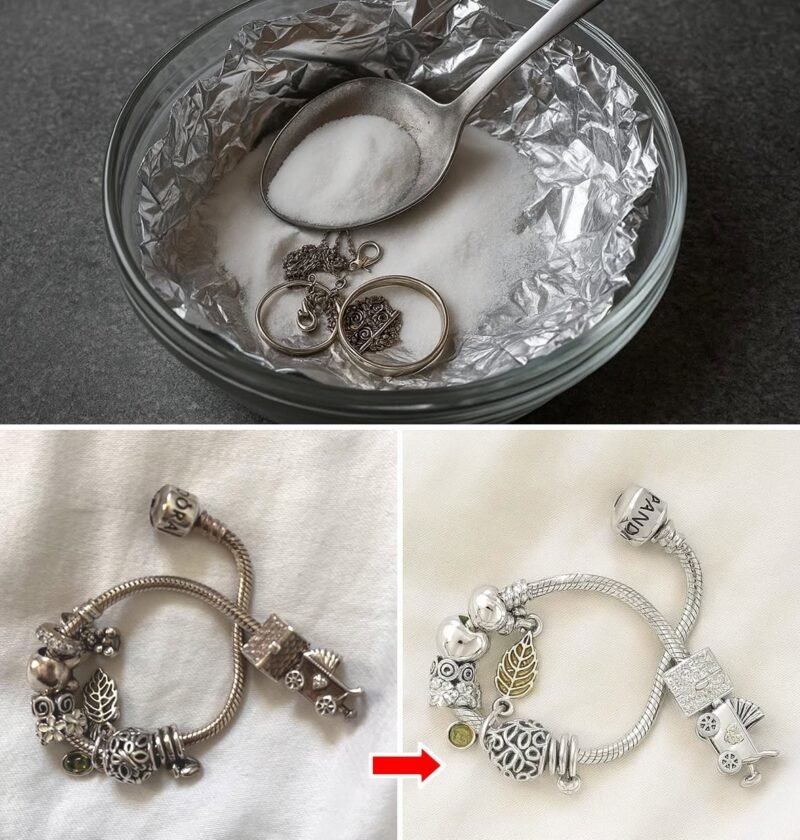
Line a bowl or mug with aluminum foil, shiny side up.
-
Add hot (not boiling) water along with 1 tablespoon of baking soda and 1 teaspoon of salt per cup of water (stir until dissolved).
-
Submerge the silver so it directly touches the aluminum foil. You may see tiny bubbles or smell a faint sulfur odor as tarnish lifts.
-
Soak for 30 seconds to 5 minutes, checking every minute so you don’t over-expose delicate pieces.
-
Rinse thoroughly under cool running water and pat completely dry with a soft cloth—never air-dry silver, as water spots can dull the finish.
Method 2: Gentle Polish & Buff (Best for Restoring Shine & Delicate Pieces)
-
Non-abrasive silver polish or polishing cloth: Apply a small amount with a soft microfiber or cotton cloth using gentle strokes along the grain or curve of the piece.
-
Mild dish soap + soft toothbrush: For intricate filigree or settings, gently brush with warm water and a drop of mild dish soap, rinse well, and dry immediately.
Crucial Safety Rules (What NOT to Do)
| Avoid This | Why It Backfires |
| Toothpaste or harsh scouring powders | Most toothpastes contain abrasives that micro-scratch soft silver, turning a crisp shine hazy over time. |
| Foil baths on porous stones, pearls, or antique oxidation | Heat, salt, and chemical reactions can damage pearls, opals, turquoise, or glued settings—and can strip dark shading you actually want to keep. |
| Silver-plated items in long foil baths | Repeated electrochemical cleaning or aggressive polishing can wear thin plating down to the base metal underneath. |
Quick Comparison: Which Method Should You Use?
-
Plain solid sterling silver with thick black tarnish: Start with the foil + baking soda bath, rinse, dry, and buff with a polishing cloth.
-
Jewelry with gemstones, pearls, or dark antique shading: Skip the foil bath; use a silver polishing cloth or gentle soap and water around the stones.