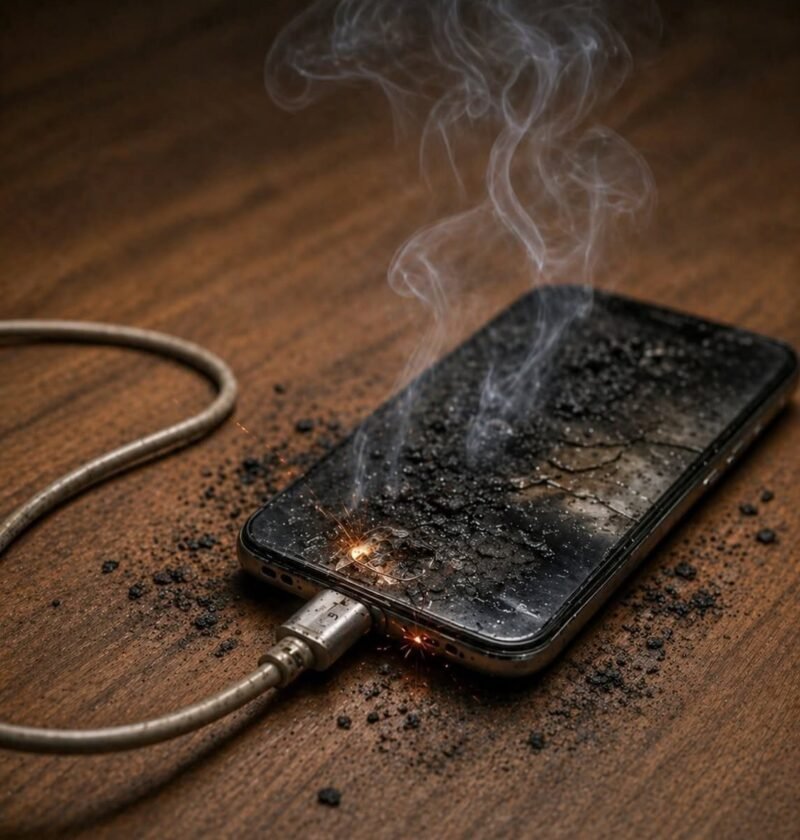
Real Charging Hazards to Avoid
-
Charging under pillows, blankets, or on a mattress: Chargers and phone batteries generate heat. Soft bedding traps that heat, which can degrade your battery, trigger thermal shutdown, or—especially with damaged or uncertified chargers—cause overheating and fire. Always charge on a hard, flat, ventilated surface.
-
Plugged in near water or high humidity: Keeping a plugged-in charger on a bathroom sink edge, near an open window during rain, or resting on damp surfaces creates a serious electrocution and short-circuit risk.
-
Bending the cable sharply at the plug or connector: Wrapping a cord tightly around the power brick or letting a heavy adapter hang by a bent cable breaks internal copper strands, leading to arcing, sparks, or melted insulation.
-
Covering power strips or overloaded extension cords: Plugging multiple high-wattage adapters into a cheap or covered power strip can overload the circuit and cause the strip to overheat.
-
Using frayed cables or loose wall outlets: If a charger sparks when plugged in, feels excessively hot to the touch, or hangs loosely out of a worn socket, unplug it immediately—poor contact creates electrical arcing and heat.
Common Viral Myths (Safe in Normal Use)
-
“Plugging the phone in before plugging the brick into the wall” (or vice versa): Modern certified USB chargers regulate voltage safely regardless of which end you connect first.
-
“Leaving a modern phone plugged in overnight on a hard surface: Modern smartphones and certified chargers automatically stop or trickle-regulate current once the battery hits 100%, though keeping the phone uncovered on a nightstand is still essential.