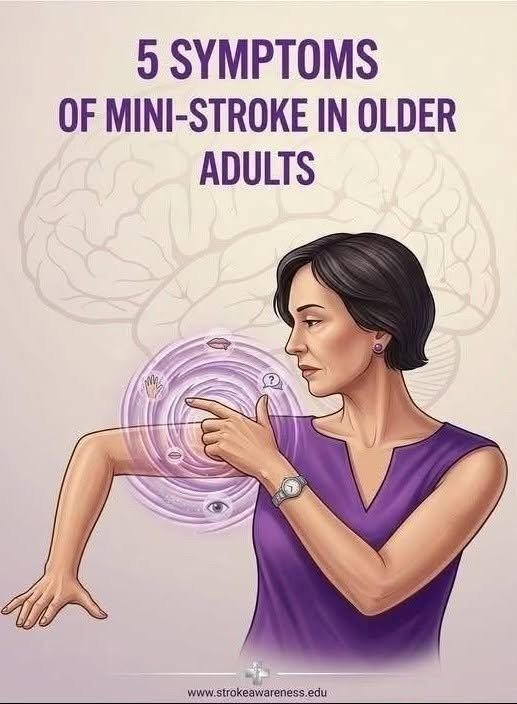
5 Classic Symptoms of a Mini-Stroke (BE FAST)
-
Sudden Facial Drooping or Uneven Smile: One side of the face droops, goes numb, or looks lopsided when the person tries to smile.
-
Sudden Weakness or Numbness in an Arm or Leg (Usually on One Side): One arm drifts downward when both are raised, or one hand, arm, or leg suddenly feels heavy, clumsy, weak, or numb.
-
Sudden Speech or Comprehension Trouble: Slurred words, garbled speech, difficulty finding words, or sudden inability to understand simple spoken sentences.
-
Sudden Vision Changes in One or Both Eyes: Blurred, darkened, or double vision—or a brief “curtain coming down” over one eye (amaurosis fugax).
-
Sudden Balance Loss, Dizziness, or Severe Coordination Trouble: Sudden trouble walking, stumbling, loss of coordination, or severe spinning dizziness—especially when paired with double vision, slurred speech, or weakness.
What to Do (and What Not to Do) If Symptoms Appear
-
Emergency Action (
<1 hour): Call 1122 or go immediately to an emergency hospital equipped for stroke care—even if symptoms already resolved. Note the exact time the person was last seen completely normal, as emergency stroke treatments depend on that clock. -
Do Not Give Aspirin, Food, or Blood-Pressure Pills at Home: Never give aspirin or other medications before a brain scan rules out a bleeding (hemorrhagic) stroke, and do not give food or water if swallowing or alertness is impaired.
-
Prompt Follow-Up If Symptoms Happened Earlier Today or Yesterday: Even if an episode occurred hours ago and cleared completely, same-day urgent hospital/stroke-clinic evaluation (brain imaging, carotid artery ultrasound, ECG/heart-rhythm monitoring, and blood pressure/cholesterol/glucose checks) is critical to prevent a major stroke.