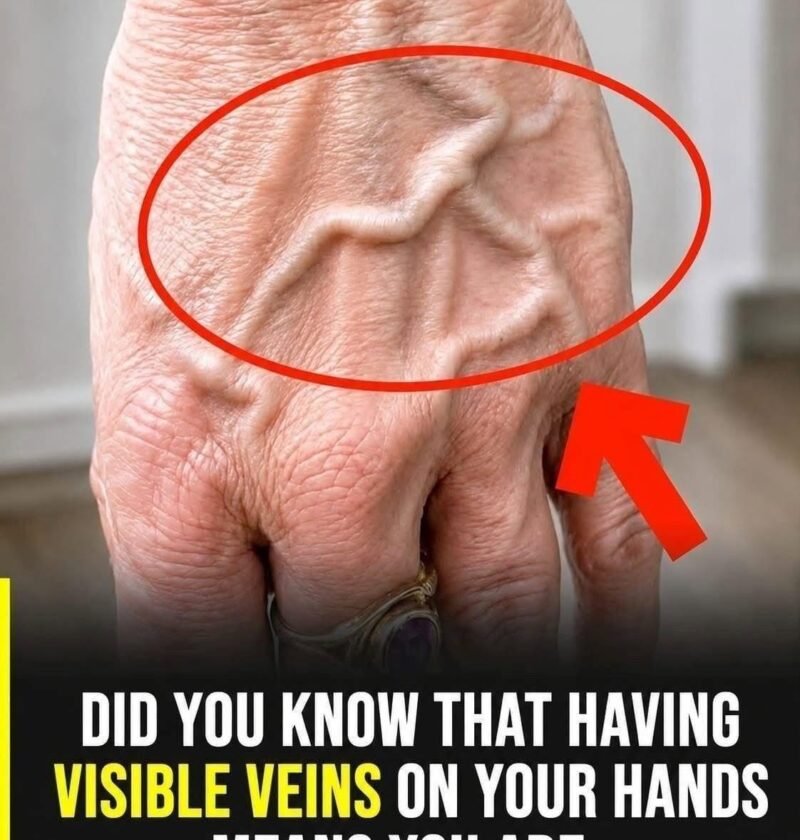
Everyday Reasons Veins Are Clearly Visible
| Common Factor | Why It Makes Veins Stand Out | Medical Reality |
| Fair, thin, or translucent skin | Less melanin and thinner subcutaneous tissue let underlying superficial veins show through easily. | Normal genetic trait; often most noticeable on the chest, breasts, hands, wrists, temples, and legs. |
| Low body fat or lean muscle tone | Less fat between the muscle and skin pushes superficial veins closer to the surface. | Common in athletes, lean individuals, and people who recently lost weight—typically a sign of fitness rather than illness. |
| Heat, exercise, or sun exposure | Warm temperatures and workouts widen blood vessels (vasodilation) and raise blood pressure temporarily to cool the body and feed muscles. | Veins fade back down once you cool off and rest. |
| Normal aging | Skin gradually loses collagen and subcutaneous fat over time, making normal veins easier to see. | Expected part of skin aging, not a sudden medical emergency. |
| Pregnancy or hormonal shifts | Blood volume increases by up to 40–50% during pregnancy while progesterone relaxes vessel walls. | Normal physiological adaptation; most prominent on the breasts, abdomen, and legs, and usually fades after delivery. |
When Visible Veins Signal a Vein Condition
-
Spider veins (telangiectasias): Tiny red, blue, or purple web-like lines near the skin surface. Usually cosmetic, though occasionally linked to mild venous pressure.
-
Varicose veins: Thick, rope-like, raised, or twisted veins—most often in the legs—caused by chronic venous insufficiency, where faulty valves allow blood to pool downward. They may cause aching, heaviness, throbbing, itching, or ankle swelling after long periods of standing.
Red Flags: When to See a Doctor Promptly
-
Sudden swelling, warmth, redness, or deep tenderness in one leg or arm (possible deep vein thrombosis / blood clot—seek urgent medical evaluation).
-
A hard, painful, red lump along a surface vein (superficial thrombophlebitis).
-
Aching, heavy legs, ankle swelling, skin darkening, or slow-healing sores near the ankles (signs of advancing venous insufficiency).
-
Sudden new prominent veins across the chest, neck, or abdomen accompanied by swelling in the face, neck, or upper body.