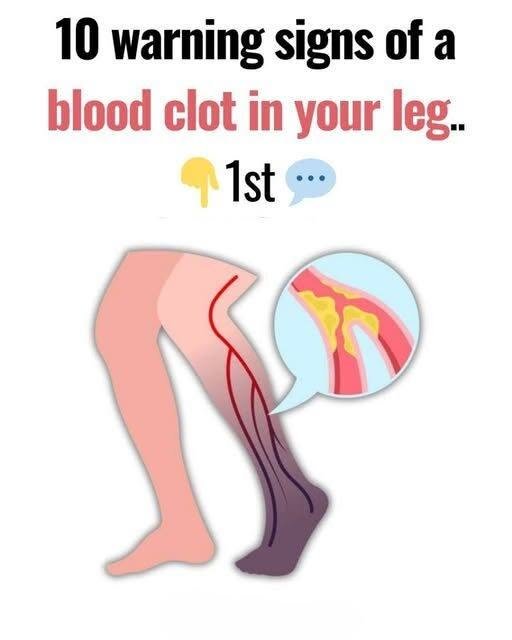
10 Warning Signs of a Blood Clot in the Leg
-
Swelling in one leg, ankle, or foot Noticeable puffiness or enlargement on one side—often the calf or thigh—that does not go down quickly with rest.
-
Throbbing or cramping pain in the calf or thigh A deep ache, soreness, or persistent “charley horse” sensation that often starts in the calf and worsens when standing or walking.
-
Warmth over a specific area of skin The skin over the painful or swollen section feels noticeably warmer to the touch than the surrounding skin or the opposite leg.
-
Red, darkened, or bluish skin discoloration A patch of skin may look reddish, purplish, or darker than normal—especially over the back of the calf or inner thigh.
-
Tenderness when pressing or squeezing the muscle Pain when touching the calf or thigh, or discomfort when flexing your foot upward toward your shin.
-
Tightness or a heavy, full feeling in the leg The affected limb feels unusually heavy, tense, or stretched due to fluid buildup behind the blocked vein.
-
Visible or unusually prominent surface veins Superficial veins near the skin may appear engorged, raised, or cord-like as blood reroutes around a deeper blockage.
-
Pain that worsens when bearing weight Discomfort that intensifies when walking, standing for long periods, or climbing stairs, rather than easing with gentle movement.
-
Pitting skin indentation Pressing a finger firmly into the swollen lower leg leaves a brief dent or dimple in the skin.
-
Sudden shortness of breath or chest pain alongside leg symptoms If leg swelling or pain is accompanied by unexplained breathlessness, sharp chest pain (worse with deep breaths), rapid heartbeat, dizziness, or coughing up blood, the clot may have traveled to the lungs.
When to Seek Care
| Symptom Pattern | Recommended Action |
| Leg symptoms + shortness of breath, chest pain, fainting, or coughing blood | Call emergency services or go to the nearest emergency department immediately |
| New one-sided leg swelling, calf pain, warmth, or redness | Seek same-day urgent medical evaluation (a venous ultrasound is typically used to check for DVT) |
Avoid massaging or rubbing a suspected clot. Firm pressure on a painful, swollen calf will not relieve a blood clot and could dislodge it.