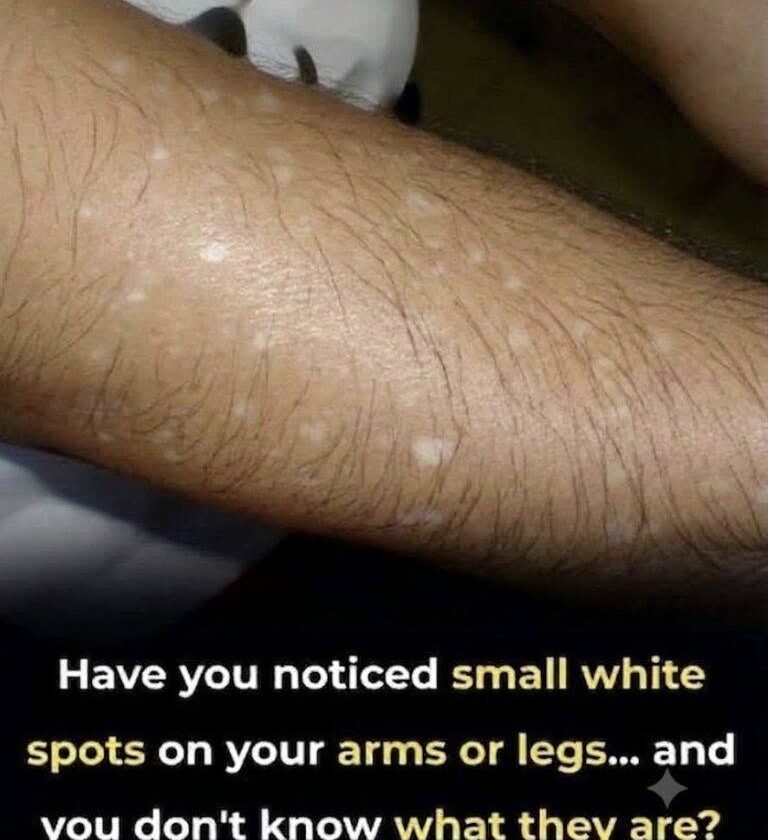
Most Common Causes of Small White Spots on Arms & Legs
| Condition | What They Look & Feel Like | Underlying Cause & Treatment |
| 1. Idiopathic Guttate Hypomelanosis (IGH — “Sun Spots”) | Tiny, flat, porcelain-white circular dots (2–5 mm, confetti-like) on the shins, forearms, and shoulders; smooth surface with no scaling or itching. Very common after age 35–40. | Cumulative UV sun exposure reduces pigment-producing cells (melanocytes) in tiny spots. Completely harmless and non-contagious; daily broad-spectrum sunscreen prevents new spots from forming. |
| 2. Tinea Versicolor (Pityriasis Versicolor) | Small pale, pink, or tan spots that may merge into larger patches with very fine, powdery scale when gently scratched; more common on upper arms, chest, and back, especially in warm/humid weather. | Mild overgrowth of normal skin yeast (Malassezia) that produces acids temporarily blocking melanin. Treated easily with topical antifungal washes or creams (e.g., ketoconazole or selenium sulfide); natural skin color takes weeks to months to even out after the yeast clears. |
| 3. Pityriasis Alba | Faint, slightly dry, ill-defined pale patches with subtle flaking—most common in children and young adults with dry skin or mild eczema history. | Mild post-inflammatory pigment loss after subtle skin dryness/eczema. Improves with gentle fragrance-free moisturizers and sun protection. |
| 4. Post-Inflammatory Hypopigmentation | Flat pale marks left behind where a mosquito bite, scratch, minor burn, eczema flare, or rash recently healed. | Temporary slowdown in local melanin production after skin inflammation; usually fades gradually over months as pigment cells recover. |
| 5. Vitiligo | Sharply bordered, completely milky-white patches that gradually enlarge and often appear symmetrically on hands, wrists, elbows, knees, or around body openings. | Autoimmune loss of melanocytes. Not contagious or life-threatening, but responds best to early dermatology treatment (topical corticosteroids, calcineurin inhibitors, or targeted phototherapy). |
What Viral Posts Get Wrong
-
“White spots mean a calcium or vitamin deficiency”: Tiny white dots on arms and legs are not caused by low calcium (a persistent myth borrowed from white marks on fingernails).
-
“Scrubbing them off or applying lemon/garlic/vinegar cures them”: Harsh scrubs, undiluted apple cider vinegar, or raw garlic cause chemical burns and worse post-inflammatory discoloration without restoring pigment.
Practical Next Steps & When to See a Dermatologist
-
Protect Skin From UV Contrast: Wear broad-spectrum SPF 30+ on exposed arms and legs—tanning the surrounding skin makes white spots stand out much more sharply.
-
Keep Dry Skin Moisturized: Use a plain, fragrance-free moisturizer if spots look slightly dry or flaky.
-
See a Dermatologist If: Spots are spreading or merging rapidly, have sharp chalk-white borders (to check for early vitiligo), itch or scale persistently, or if any spot becomes raised, scaly/crusty, bleeding, or pearly (to rule out atypical sun-damaged growths).