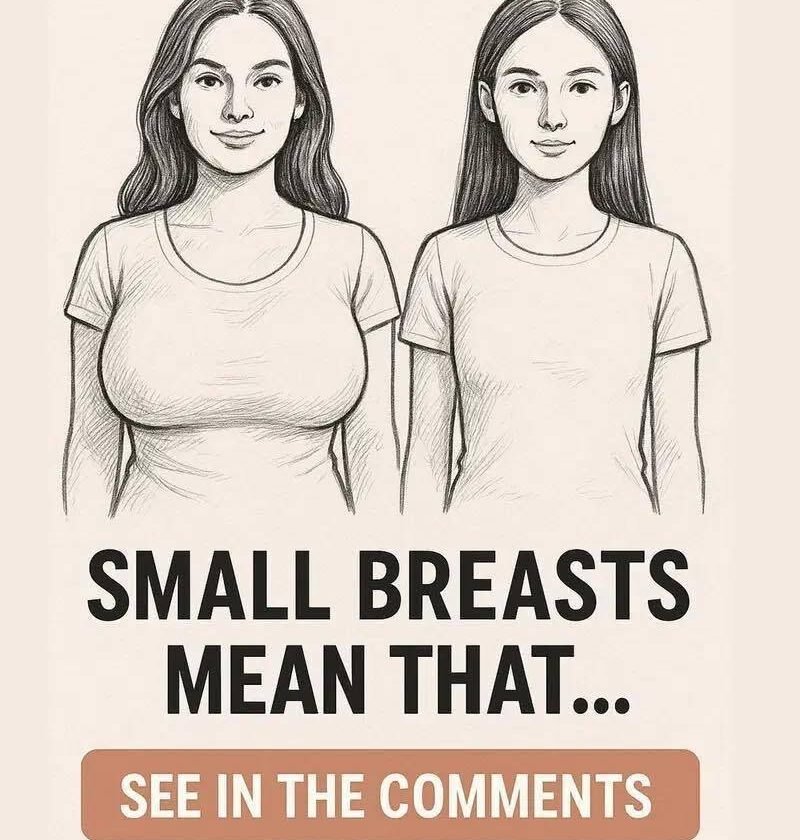
Headlines reading “If a woman has small breasts, it means that her part int… See more…” use a crude anatomical curiosity-gap cliffhanger to turn natural body variation into a clickbait rumor—usually claiming breast size reveals something secret about a woman’s pelvic/genital anatomy, fertility, hormone levels, milk supply, or personality.
In medicine and human anatomy, breast size has no correlation with the size, shape, or appearance of a woman’s external or internal genitalia, nor does it measure fertility or femininity.
What Breast Size Actually Reflects vs. Viral Myths
| Viral Clickbait Claim | Anatomical & Medical Reality |
| “Breast size predicts genital anatomy or tightness.” | Completely false. Breast tissue and pelvic/genital structures develop through separate embryological pathways and vary independently from person to person. |
| “Small breasts mean low estrogen or lower fertility.” | False. Once normal puberty occurs, breast volume depends mostly on genetics and local fat distribution, not higher or lower reproductive hormone levels or egg reserve. |
| “Women with small breasts cannot produce enough breast milk.” | False. Milk production comes from glandular (mammary) tissue, not overall breast size (which is largely adipose fat). Women with small breasts routinely produce full, healthy milk supplies. |
| “Breast size reflects personality, libido, or character.” | Pure folklore. Internet “body-reading” charts have zero basis in psychology, endocrinology, or medicine. |
What Actually Determines Breast Size
-
Genetics: Inherited traits govern both the amount of glandular tissue and how much fat the body stores in the chest area.
-
Overall Body Fat & Weight Shifts: Because breast tissue contains a substantial proportion of fat, weight gain, weight loss, and exercise change cup size naturally.
-
Normal Hormonal Phases: Temporary swelling and tenderness happen across the menstrual cycle, during pregnancy, while breastfeeding, and around perimenopause/menopause regardless of baseline size.
When Breast Changes Actually Matter Medically
Size itself—small, medium, or large—is not a health issue. What matters in breast health is a new change from a woman’s normal baseline, such as a new hard lump, skin dimpling or puckering, nipple inversion or spontaneous discharge, persistent redness/swelling, or new localized pain that does not fade after a menstrual cycle.