Why Vicks VapoRub Only Works Briefly (If at All)
-
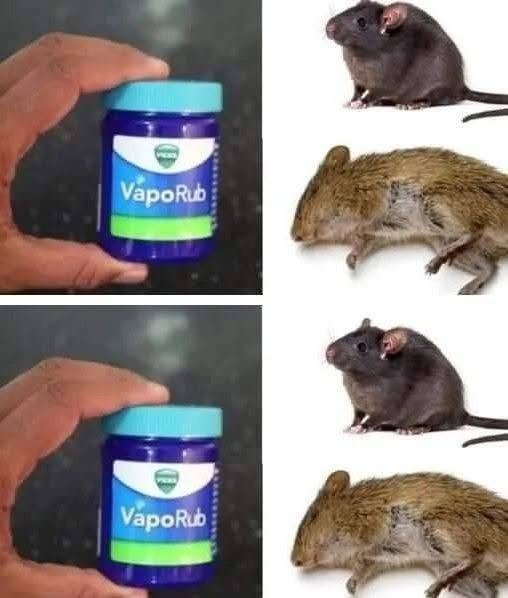
Strong scents irritate rats’ noses temporarily: Rats rely heavily on smell to navigate and find food. The strong menthol, camphor, and eucalyptus vapors in Vicks can temporarily disorient or annoy them so they avoid a specific spot for a day or two.
-
Rats adapt quickly: Once the scent fades—or if food, warmth, or nesting shelter is nearby—rats simply walk around the cotton ball or get used to the smell. It will not kill rats, stop breeding, or keep determined rodents out of a kitchen or pantry.
Important Safety Warnings
-
Toxic to cats and dogs: Vicks VapoRub contains camphor and eucalyptus oil, both of which are toxic to cats and dogs if licked or ingested off cotton balls or baseboards.
-
Hazard for young children: Camphor poisoning can happen quickly if toddlers touch or swallow Vicks-soaked cotton pads.
-
Surface staining: Petroleum jelly leaves greasy stains on wood, walls, and fabrics.
What Actually Gets Rid of Rats Safely & Effectively
-
Seal Entry Points (Most Important Step): Rats can squeeze through holes as small as a coin (about 1.5–2 cm). Stuff gaps around pipes, vents, under doors, and wall cracks tightly with coarse steel wool or copper mesh sealed with caulk or cement (rats easily chew through foam, rubber, and plastic alone).
-
Cut Off Food and Water: Store grains, pet food, and pantry staples in hard plastic, glass, or metal containers with tight lids, wipe kitchen counters nightly, empty trash bins regularly, and fix leaky pipes or standing water.
-
Use Proven Traps Along Wall Edges: Place snap traps or enclosed electronic traps perpendicular to walls (with the trigger side facing the baseboard), since rats travel along edges rather than open floors. Bait with a tiny smear of peanut butter, hazelnut spread, or dried fruit.
-
Avoid Loose Poison Bait Inside Living Spaces: Rodenticides can poison pets or children, and poisoned rats often die inside walls or ceilings, creating severe odor and fly problems.