The Gardening Reality Check
-
What viral ingredients actually do (and don’t do):
-
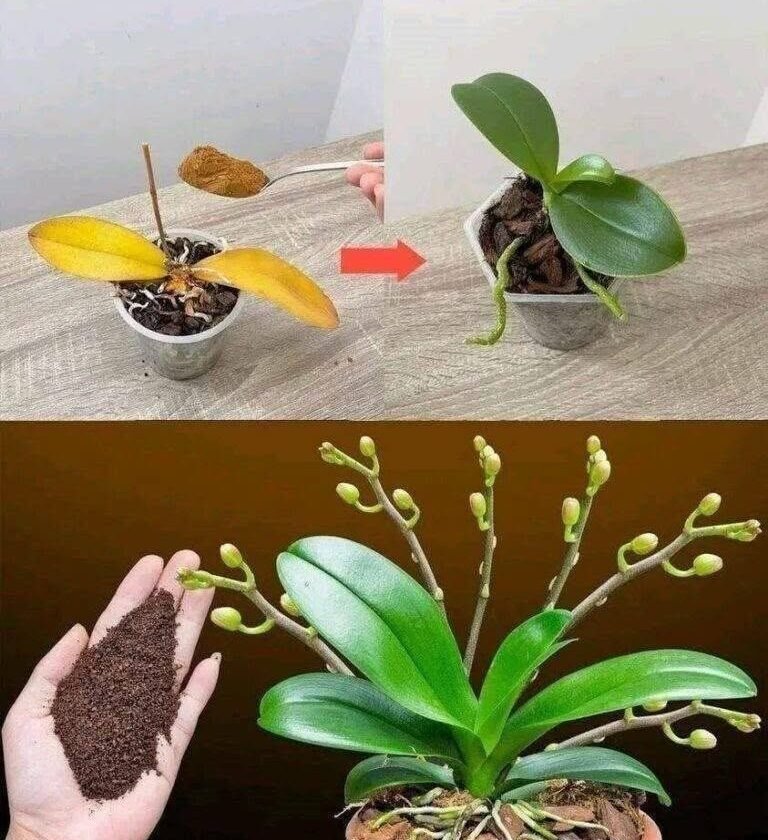
Cinnamon: Acts as a mild natural antifungal when dusted onto fresh leaf or root cuts, but it contains virtually no nutrients to trigger flower spikes.
-
Epsom salt (magnesium sulfate): Provides magnesium and sulfur, which help if a plant has a specific deficiency, though excessive salts can burn sensitive orchid roots.
-
Rice water / banana peel water / milk: Offer trace minerals, but in indoor pots without soil microbes, the starches, sugars, and fats mostly rot—attracting fungus gnats and breeding root-rotting bacteria.
-
Baking soda: Raises pH and adds sodium, which harms acid-loving orchids over time.
-
What Actually Triggers an Orchid to Rebloom
-
A Nighttime Temperature Drop: Most Phalaenopsis orchids need 2 to 3 weeks of cooler nights—around 13°C–16°C (55°F–60°F), which is roughly 5°C–8°C cooler than daytime room temperature—to signal the plant to send up a flower spike.
-
Bright, Indirect Light: Low light keeps leaves dark green and healthy but prevents blooming. Move it closer to a bright east- or south-facing window (shielded from harsh midday sun) so the leaves turn a healthy olive or grassy green rather than dark forest green.
-
Weak, Balanced Fertilizer (“Weakly, Weekly”): Use an actual orchid fertilizer diluted to quarter- or half-strength every 1–2 weeks during active leaf and root growth, flushing the pot with plain water once a month so salts don’t build up.