The Best Single Whitening Boosters (and What Each Actually Does)
| Ingredient | What It Really Does | Best Used For |
| Oxygen Bleach (Sodium Percarbonate) (The true star) | Releases hydrogen peroxide in warm/hot water to break down organic stains, sweat yellowing, and dinginess without damaging cotton. | Everyday yellowed or gray cotton whites, towels, bedsheets, and athletic wear. |
| Washing Soda or Borax | Softens hard water so detergent rinses cleanly instead of leaving gray mineral film trapped in fabric. | Hard-water areas where whites turn dull or stiff over time. |
| Hydrogen Peroxide (3%) | Mild liquid oxidizer that brightens collar/underarm yellowing and removes blood or organic spots. | Spot-treating yellow underarm stains or small loads. |
| Liquid Bluing | Adds a microscopic blue tint that optically cancels out yellow tones so fabric looks brighter white to the eye. | Making clean whites look crisp and bright again (does not remove dirt). |
How to Actually Get Dingy Whites Bright Again (Step-by-Step)
-
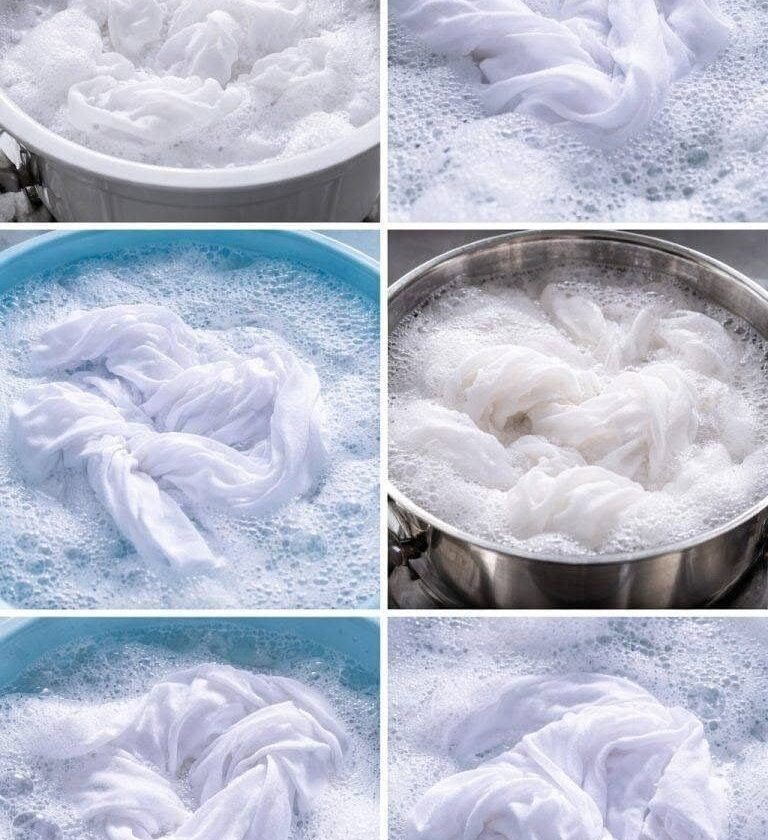
Pre-soak in oxygen bleach: Dissolve 1 scoop (about 2–3 tablespoons) of oxygen bleach in a basin or tub of warm to hot water (check garment care labels first), submerge your whites, and soak for 1 to 6 hours (or overnight for heavily yellowed cottons).
-
Wash with the right amount of detergent—not too much: Excess detergent leaves residue that traps dirt and turns whites gray. Wash the soaked clothes on the warmest water setting safe for the fabric.
-
Skip fabric softener on whites: Fabric softeners coat fibers in a waxy film that holds onto body oils and causes yellowing over time. Use ½ cup of white vinegar in the rinse cycle instead to strip detergent residue.
-
Dry in direct sunlight when possible: UV rays naturally bleach and brighten damp white cottons without harsh chemicals.
Quick Warning on Fabrics
-
Do NOT use oxygen bleach or hot water on wool, silk, or leather—it breaks down protein fibers and shrinks or ruins the garment.
-
Avoid chlorine bleach on polyester, spandex/elastane, or sweat-stained shirts: Chlorine reacts with proteins in sweat and synthetic coatings, often making yellow stains worse.