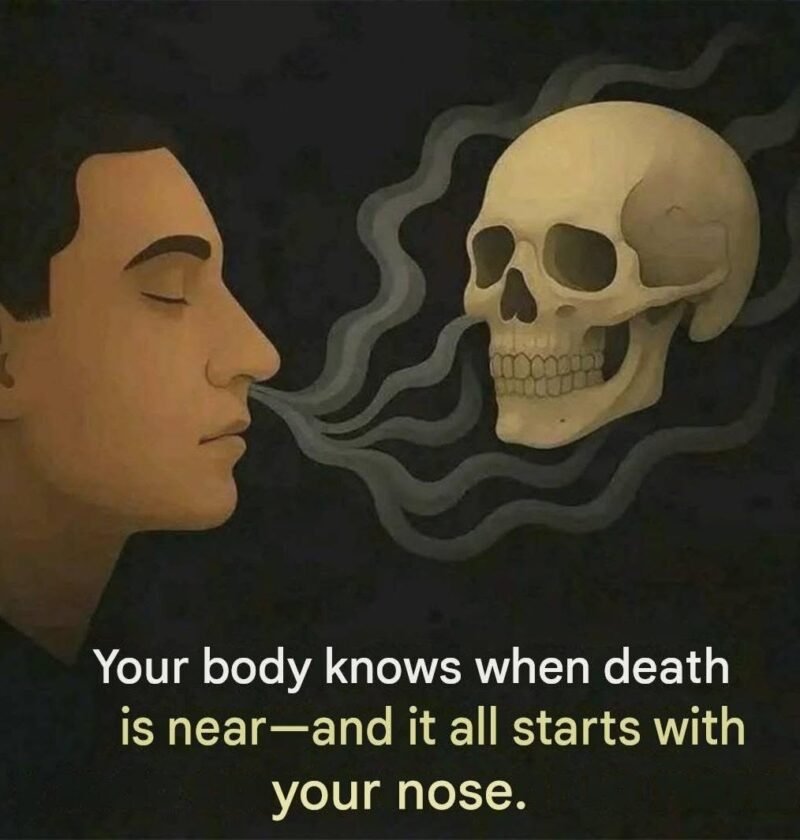
What “The Scent of Death” Actually Is
| Source of Odor | Underlying Medical / Biological Cause | What It Actually Reflects |
| Sweet, fruity, or nail-polish-like breath | Ketones (acetone) released through the lungs during severe starvation, prolonged fasting, or diabetic ketoacidosis (DKA). | The body is breaking down fat for fuel without enough insulin or caloric intake—a treatable medical emergency in diabetes, or a natural shift when intake stops near death. |
| Ammonia or urine-like breath and skin odor | Uremia—buildup of urea and nitrogen waste in blood and sweat when kidney filtration fails. | Advanced kidney failure, severe dehydration, or multi-organ shutdown. |
| Musty, sweet-earthy breath (fetor hepaticus) | Sulfur compounds (such as dimethyl sulfide) accumulating in the bloodstream when a severely damaged liver can no longer filter portal blood. | End-stage liver disease / liver failure. |
| Foul, putrid, or necrotic tissue odor | Bacterial breakdown of dying tissue, pressure ulcers, gangrene, advanced fungating tumors, or severe oral/lung infection. | Local tissue necrosis or anaerobic bacterial infection—not a mysterious whole-body aura. |
| Changes in natural body chemistry | Altered skin microbiome, reduced sweating/hygiene, bowel or bladder incontinence, and volatile organic compounds (VOCs) shifting during metabolic slowdown. | Normal physiological decline in critical illness or hospice care. |
Real Physiological Signs in the Final Days and Hours of Life
-
Profound fatigue and increased sleep: Spending most or all of the day asleep or difficult to wake as energy conservation shifts inward.
-
Loss of appetite and thirst: Natural refusal of food and fluids as the digestive tract slows down (forcing food or fluids at this stage causes discomfort rather than strength).
-
Decreased urine output: Dark, concentrated urine and infrequent urination as kidney blood flow drops.
-
Circulation changes (mottling and coolness): Hands, feet, knees, and ears feel cool to the touch, and skin may develop a purplish-blue lacy pattern (livedo / mottling) as blood flow is prioritized to vital organs.
-
Breathing pattern shifts: Shallow breaths, pauses between breaths (Cheyne-Stokes respiration), or noisy, gurgling breathing (“terminal secretions”) caused by saliva pooling in the throat when swallowing reflexes weaken.
-
Confusion, restlessness, or withdrawal: Reduced awareness of surroundings, talking to people not present, or restlessness driven by low oxygen, medication buildup, or metabolic shifts.
Important Distinction: Medical Emergency vs. Expected End-of-Life Care
-
In someone NOT in hospice or expected end-of-life care: Sudden fruity/ammonia breath, extreme confusion, cold mottled skin, severe shortness of breath, or foul wound odor are urgent medical emergencies (such as diabetic ketoacidosis, sepsis, acute kidney/liver failure, or shock) that require immediate hospital care—many are reversible if treated promptly.
-
In someone receiving palliative or hospice care: These signs are expected, natural parts of the dying process, and care focuses on comfort—gentle mouth care, repositioning, keeping skin warm, and medications to ease air hunger, anxiety, or secretions.